How to Order

We support children’s hospitals around the nation and the globe to bring Rapid Precision Medicine™ to sick children. RCIGM clinical services may only be ordered by a licensed ordering provider. 

To expand national access to rWGS, RCIGM has partnered with Inflection Medicine, which supports commercial workflows. For commercial clinical testing inquiries, please contact: support@inflectionmedicine.com

RCIGM Hospital Partner & Ready to Order?

Access the Partner Portal
You will need to authenticate via RCHSD's Microsoft 365 authentication system.
Partner account required.
Need help? (858) 966-8127
You will be asked to to authenticate via RCHSD’s Microsoft 365 authentication system. Need help? (858) 966-8127

Quick Guide: First Steps to Testing

1. Consent Family

2. Collect Samples

3. Complete Requisition Form

4. Package & Ship

Interested in starting?

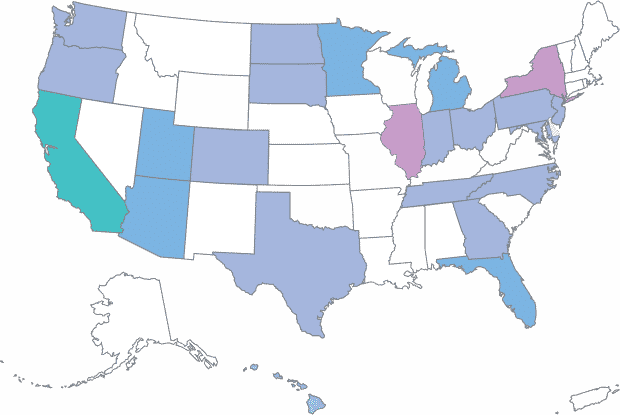
Map of states with children's hospitals participating in Rapid Precision Medicine Network

Advantages for Hospitals in RCIGM’s Rapid Precision Medicine™ Network

Hospitals that have completed onboarding as partners with RCIGM access a more streamlined ordering process and receive quicker access to results, via the Ordering Portal.

RCIGM Hospital Partner?
Go to the Partner Portal You will need to authenticate via RCHSD’s Microsoft 365 authentication system.
Partner account required.
Need help? (858) 966-8127
You will be asked to to authenticate via RCHSD’s Microsoft 365 authentication system. Need help? (858) 966-8127

Partner Hospital Instructions​

Access the Partner Portal
You will need to authenticate via RCHSD's Microsoft 365 authentication system.
Partner account required.
Need help? (858) 966-8127
You will be asked to to authenticate via RCHSD’s Microsoft 365 authentication system. Need help? (858) 966-8127

1. Enroll Case in Ordering Portal

2. Print Requisition Form from Portal

3. Ship Samples + Requisition Form to RCIGM

More Guides, How-to Tips & Videos

Contact RCIGM

  1. If you have questions about the correct test to order for your patient at  RCIGM_rWGS@rchsd.org or (858) 966-8127.
  2. Request a sample testing kit if this is the first time ordering or you do not have RCIGM sample testing kits on hand. Please allow at least 24 hours for receipt of the sample testing kit.

Consent & Sample Collection

  1. Review the Requisition Form and the “About WGS” parent information sheet, available in the Clinician Toolbox.
  2. Consent the patient/family for testing. If you have questions about informed consent, genetic counselors at RCIGM are available to speak with providers. Example Consent Forms.
  3. Collect sample(s) following the sample collection requirements.
    • Label all samples with two patient identifiers (Name/DOB/MRN)
    • See requisition form for sample and labeling requirements.
    • Package each person’s specimen(s) in a separate biohazard bag

Requisition

  1. Complete the Requisition Form. Existing partners use the
    online portalYou will need to authenticate via RCHSD's Microsoft 365 authentication system.
    Partner account required.
    Need help? (858) 966-8127

    . First-time clinical partners may download and print the requisition form here.

  2. Send relevant clinical notes via one of four options:
    • Upload to
      RCIGM PortalYou will need to authenticate via RCHSD's Microsoft 365 authentication system.
      Partner account required.

      with case order (preferred).

    • Encrypted/secure email: RCIGM_rWGS@rchsd.org.
    • Include and send with packaged sample(s) and test requisition forms.
    • Fax to (858) 966-8092.

Note: For faster results, we recommend a machine-readable format, preferably searchable PDF.

Package & Ship Samples

  1. Package the sample(s) according to the specimen requirements instructions and include a copy of the requisition form.
  2. Send sample via First Overnight delivery and follow the shipping instructions. NOTE: the RCIGM laboratory accepts samples Monday through Saturday until 3pm PST. View holiday schedule
  3. After shipping, send tracking number to RCIGM_rWGS@rchsd.org and RCIGM_ClinicalLab@rchsd.org .

*RCIGM Clinical Services may only be ordered by a licensed clinician. We are unable to provide services directly to patient families.

Test-Specific Specimen Requirements

  • Ultra-Rapid Whole Genome Sequencing
    • Preferred Specimen Types: Peripheral Whole Blood (EDTA)
    • Alternate/Acceptable Specimens: Extracted DNA, Buccal Swab†, Dried Blood Spot*
  • Rapid Whole Genome Sequencing
    • Preferred Specimen Types: Peripheral Whole Blood (EDTA)
    • Alternate/Acceptable Specimens: Extracted DNA, Buccal Swab, Dried Blood Spot
  • Standard Whole Genome Sequencing
    • Preferred Specimen Types: Peripheral Whole Blood (EDTA)
    • Alternate/Acceptable Specimens: Extracted DNA, Buccal Swab, Dried Blood Spot

†Acceptable Specimen Type for Familial Samples Only
*When dried blood spot (DBS) is submitted for Ultra-Rapid Whole Genome Sequencing (URWGS), the expected turnaround time is 5–7 days from sample receipt. Peripheral whole blood is preferred when a ≤ 5-day URWGS turnaround time is required.

Peripheral Whole Blood (EDTA)

  • Limitation: Packed cell/platelet transfusions may impact mitochondrial (mtDNA) variant interpretation if performed less than 2 weeks prior to specimen collection.
  • Collection: Minimum requirement is 1 tube of ≥ 0.5 mL (cc) whole blood in an Ethylenediaminetetraacetic acid (EDTA) tube. Two tubes are strongly preferred. One (1) tube will be used for Whole Genome Sequencing and one (1) tube for orthogonal identity confirmation check to ensure accuracy in sample collection and processing.
  • Storage: Refrigerate at 2-8°C until time of shipment. Whole blood may be refrigerated up to 5 days before shipping. Do not freeze.
  • Rejection: Specimen will be rejected if leaking, frozen, hemolyzed, clotted, improperly collected or from a non-validated specimen source (e.g. cord blood), or if a patient has received an allogeneic bone marrow/stem cell transplant. Peripheral blood of patients with an active hematologic malignancy in circulation tumors will also be rejected.
  • Shipping: Preferably ship whole blood immediately for overnight delivery with expected arrival Monday-Saturday. Shipping overnight at room temperature is acceptable if a cold pack is not available. Avoid placing cold packs in direct contact with specimen tubes.

Buccal Swab

  • Limitation: Buccal swabs are prone to lower and less consistent DNA yield depending on quality of collection, a higher risk of contamination from oral microbiota and food, and greater susceptibility to degradation during storage and transport compared to blood.
  • Collection: Collect using a MAWI iSWAB®-DNA-1200 collection device. RCIGM is not validated to perform testing on buccal swabs collected using other buccal swab collection devices. Donor must not eat, drink, smoke or chew gum for 30 minutes prior to collection. Collection instructions provided with the kit must be followed.
  • Storage: Store at ambient room temperature (15°C to 30°C). Do not freeze.
  • Rejection: Samples will be rejected if sample is spilled, leaked, or damaged or was collected with a non-validated collection device. Not an acceptable sample type if the patient is being breastfed.
  • Shipping: Preferably ship at ambient room temperature (15°C to 30°C) with expected arrival Monday-Saturday.

Extracted DNA

  • Limitation: Extracted DNA is susceptible to degradation due to environmental factors like heat, sunlight, and freeze-thaw cycles. Certain extraction methods can inhibit downstream processing due to leftover reagent contaminants and DNA fragmentation.
  • Collection: DNA extracted from peripheral whole blood in a CAP/CLIA-accredited or international equivalent laboratory. Minimum DNA yield of 2 µg and 20 ng/µL concentration is required.
  • Storage: Refrigerate (2°C to 8°C) or freeze (-25°C to -15°C) until time of shipment.
  • Rejection: DNA will be rejected if it (1) does not meet DNA yield or quality requirements (see Collection), (2) was not extracted in a CAP/CLIA–certified laboratory (or international equivalent), or (3) was extracted from a non-validated specimen source (e.g., cord blood, saliva, amniotic fluid, CVS).
  • DNA extracted from the specimen sources listed below will be rejected:
    • Amniocytes
    • Chorionic villus sampling
    • Product of conception
    • Cord blood collected prior to birth
    • Saliva (for targeted testing only)
    • Paraffin-embedded tissue, regardless of whether or not it was fixed in formalin
    • Tumors
    • Peripheral blood or saliva of patients with an active hematologic malignancy in circulation tumors
  • Note: DNA extracted from fibroblasts is an acceptable specimen source.
  • Shipping: If refrigerated, preferably ship overnight with a cold pack with expected arrival Monday-Saturday. If shipping frozen, ship on dry ice.

Dried Blood Spot

  • Limitation: Packed cell/platelet transfusion may impact mitochondrial (mtDNA) variant interpretation if performed less than 2 weeks prior to specimen collection.
  • Collection: Must be collected using a Whatman 903 protein saver DBS card. For best results, collect and completely fill all 10 mm diameter spots with peripheral whole blood. During collection do not squeeze or milk the heel puncture site to fill the spots.
  • Storage: Store at room temperature (15°C to 30°C) in a dry location, preferably less than 30% humidity. Do not refrigerate or freeze. Cards must be dried for a minimum of three hours before shipment.
  • Rejection: Specimen will be rejected if submitted for any test in which DBS is not listed as an alternative specimen type, if insufficient volume, does not meet testing quality metrics or patient has had an allogeneic bone marrow/stem cell transplant.
  • Shipping: Preferably ship after drying for overnight delivery with expected arrival Monday-Saturday. To aid in preventing moisture accumulation during shipment, include a desiccant or absorbent pack when available.
  • Labeling Requirements: Label specimen collection device(s) with at least two identifiers.
    • Preferred: patient’s full name and date of birth.
  • It is recommended to also include medical record number (MRN) and/or specimen ID number, when available.

Shipping Address

Pack and ship specimens according to the requirements listed above. Ship packages Monday through Friday. For Friday shipments, mark for Saturday delivery. Use the following address:

ATTN: Clinical Genome Center
Rady Children’s Institute for Genomic Medicine
7910 Frost Street, Suite 240
San Diego, CA 92123

Shipping Conditions

  • Do not freeze.
  • Refrigerate until time of shipment at 2-8°C.
  • Whole blood may refrigerated up to five days before shipping.
  • Ship overnight delivery with a cold pack.
  • Do not place cold pack in direct contact with sample.
  • Shipping overnight at room temperature is acceptable if cold pack is not available.

Shipping Address

Rady Children’s Institute for Genomic Medicine
Attn: Clinical Genome Center
7910 Frost St, Suite 240
San Diego, CA 92123

  • Mean time for returning provisional reports is under 3 days.

  • Final results are typically delivered within 7 to 14 days for rWGS, or ≤ 30 days for standard WGS.
  • Urgent, clinically actionable results will be communicated by phone, followed by electronic notification.
  • If clarification of the test order or an additional specimen are needed, the ordering provider will be contacted. Please provide phone and email for communication.

Please provide the account and billing contact information in the Requisition Form, including:

  • Institution
  • Fed Tax ID
  • Contact Name, Email
  • Billing Address
  • Phone, Fax

For fees, please attach written acceptance from the Ordering Provider’s authorized representative (e.g. email).

For Terms and Conditions, see the Requisition form for invoicing, billing, and payment.

Contact Us

For invoice and billing questions, email RCIGM_Accounting@rchsd.org
For test fee information, email RCIGM_rWGS@rchsd.org or call us at (858) 966-8127.

The RCIGM lab accepts samples for accessioning on Mondays through Saturdays from 8am until 6:30pm PST. Earliest delivery is preferred.

NOTE: The Clinical Genome Center is closed on Sundays.

Holidays: Samples are not accepted nor accessioned on major national holidays: New Year’s Day, Memorial Day, 4th of July, Thanksgiving and Christmas.

Frequently Asked Questions

rWGS® is best considered for critically-ill infants and children in the inpatient setting for which a rapid genetic diagnosis could impact medical management and outcomes.

Indications for rWGS® testing include:

  • Critically-ill infants and children in the intensive care unit with no unifying diagnosis
  • Critically-ill infants and children for whom a rapid molecular diagnosis may inform medical management, treatment and/or prognosis
  • Molecular diagnosis of suspected genetic disease
    Identification of rare genetic disease variants in patients who have failed to receive a diagnosis despite extensive work-up and previous testing
  • Infants and children with a history of multiple hospitalizations or readmission within 30 days of discharge for an unexplained condition
  • Infants or children with prolonged hospital stay

Benign and Likely Benign variants are not reported. In addition, RCIGM-CGC does not offer reporting on carrier status, pharmacogenetic markers, polygenic risk scores, or genome wide association studies (GWAS) risk variants.

Ready to Order?

Go to the Partner Portal
You will need to authenticate via RCHSD's Microsoft 365 authentication system.
Partner account required.
Need help? (858) 966-8127
You will be asked to to authenticate via RCHSD’s Microsoft 365 authentication system. Need help? (858) 966-8127

Or

Contact Us About BeginNGS