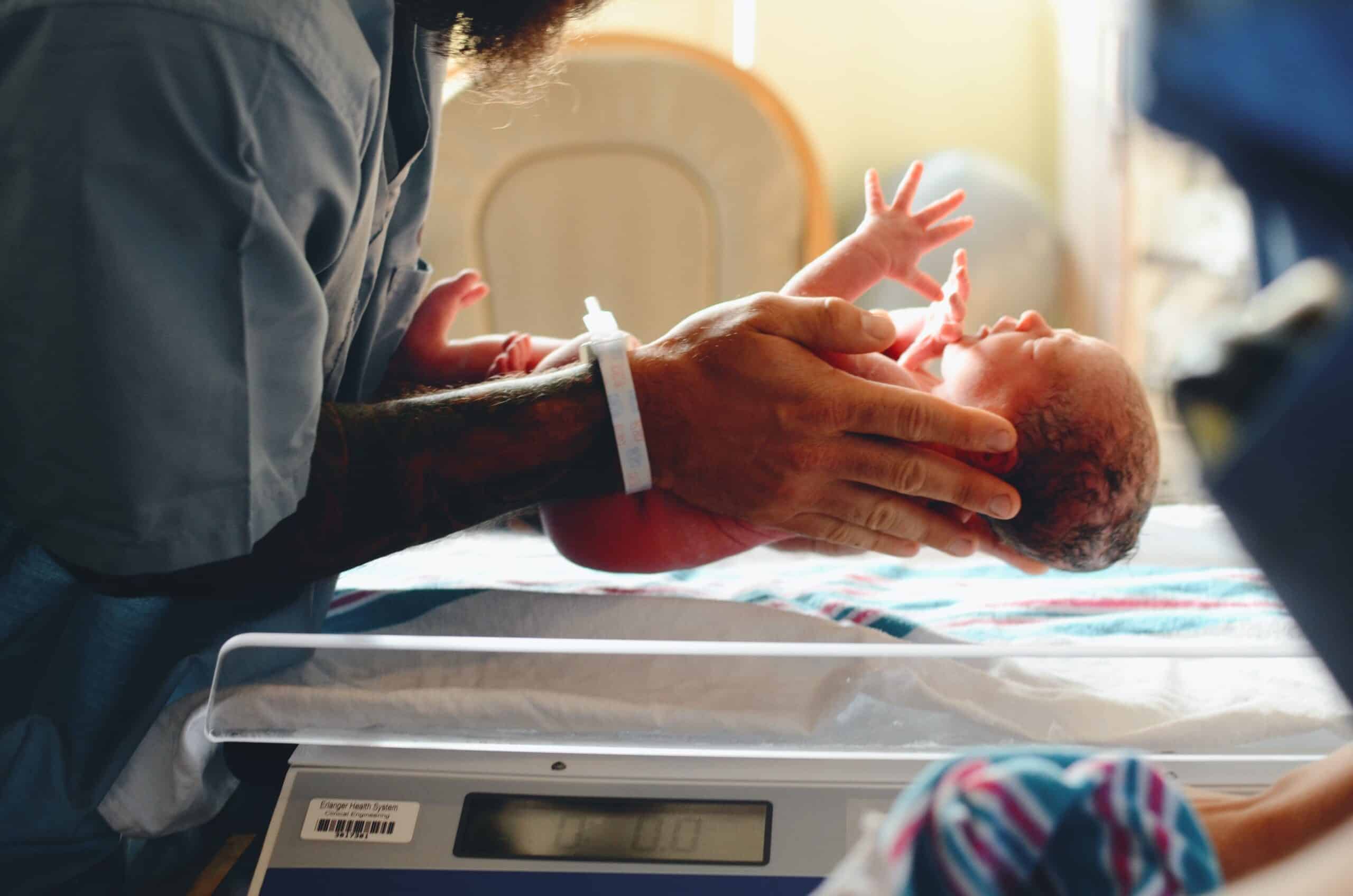
But for families of babies born with a rare genetic disease, the story is one fraught with challenges on their journey to an accurate diagnosis and appropriate care.
Imagine if we could change the narrative for those families from the very start.
Rady Children’s Institute for Genomic Medicine is helping to rewrite the story for infants with rare diseases through BeginNGS®.
BeginNGS is a novel health care delivery system designed to screen newborns for genetic diseases — and connect their doctors with effective interventions.
Genetic diseases are chronic, progressive, and can be life-threatening.
They may not appear until later in childhood; however, the effects may begin before symptoms manifest. The effects may be irreversible if not diagnosed and treated.
Sometimes the solution is as simple as a vitamin supplement.
Other times, the baby can receive cutting-edge gene therapy and grow up to be a typical healthy child, like Fitz Kettler, pictured here.
BeginNGS helps ensure each baby is screened for genetic conditions for which interventions exist, and helps physicians provide effective interventions in a timely manner.
What is BeginNGS?
BeginNGS is an RCIGM-led pilot that uses genome sequencing as a screening tool for newborns, to identify genetic conditions before infants get sick. The BeginNGS pilot is not about replacing the current biochemical newborn screening approach (for roughly 60 known conditions) – rather, it is a complement to the newborn screening processes and infrastructure that are already in place.
Technological advances in genomic sequencing have made it possible to return test results in just a few days at a lower cost.
As our understanding of genetic diseases grows, and the pace of therapeutic innovation accelerates, newborn screening by genomic sequencing may provide a more dynamic way of expanding the number of conditions.
Since the whole genome is sequenced, the screening can be rapidly expanded to include new disorders as effective interventions become available.
Screening
Screening newborns for ~400 genetic diseases with known intervention options using rWGS
Rapid Intervention
Identifying rare disease earlier to facilitate access to Rapid Precision Medicine™
Slide
By rewriting the beginning, we can help families end their diagnostic and therapeutic odysseys so they can fill their stories with hope.
— Stephen Kingsmore, MD, DSc
President & CEO, Rady Children's Institute for Genomic Medicine
Slide
Early diagnosis of rare disease patients will open the door to ongoing monitoring of symptoms and gathering of critical natural history data
— Charlene Son Rigby
CEO, Rare-X
Why Now?
There are over 30 million rare disease patients in the United States and over 5,000 rare disease clinical trials underway. Ending the diagnostic and therapeutic odyssey is finally within our grasp. Without disruptive progress, precision medicine at scale isn’t possible. BeginNGS will help us identify rare disease patients earlier, increase clinical trial enrollment and rapidly progress rare disease treatment.
Join Us
Interested in partnering with us or learning more about the project?
This pilot includes birthing hospitals throughout the U.S. and abroad.
Blood-spot samples will be collected at the time of birth and sent to the lab where WGS will be performed.
Genomic analysis and interpretation will be performed for ~400 early onset actionable genetic conditions.
If a positive screening result is detected, the treating physician will be provided with access to resources on medical management and available interventions. They will then discuss next steps with the family. Licensed and board-certified genetic counselors will be available for consultation.
Genet Med. 2026 Jan;28(1):101618. doi: 10.1016/j.gim.2025.101618. Epub 2025 Oct 24. ABSTRACT PURPOSE: For decades, the selection of disorders included in newborn screening (NBS) programs has been guided by principles published by Wilson and Jungner in 1968. As research explores the expansion of conditions included in NBS through genomic sequencing, there is a critical need for updated recommendations to address the opportunities and complexities of genomic data. METHODS: The International Consortium on Newborn Sequencing includes leaders from over 16 research projects investigating genomic NBS across the United Kingdom, Europe, United States, and Oceania. Consortium members were invited to participate in a modified Delphi study, aggregating opinion on the selection of conditions for genomic NBS through 3 rounds of online questionnaires, with feedback provided to participants between rounds. RESULTS: In round 1, 94 participants completed the questionnaire, and 10 of 43 statements reached consensus. In round 2, 81 participants completed the questionnaire,
BMJ Open. 2025 Nov 13;15(11):e098609. doi: 10.1136/bmjopen-2024-098609. ABSTRACT INTRODUCTION: In the last 60 years, newborn bloodspot screening (NBS) has expanded as a public health intervention from a single severe childhood genetic disease (SCGD) to up to as many as 80 SCGD and testing of ~40 million newborns/year worldwide. However, the gap between current NBS and its potential to increase the efficiency, effectiveness and global equity of healthcare delivery for SCGD is large and rapidly growing. There are now effective therapeutic interventions-drugs, diets, devices and surgeries-for up to 2000 SCGD. Since almost all SCGD can be identified by bloodspot genome sequencing, it has been a longstanding goal to supplement current NBS with genome sequencing-based NBS (gNBS) for all eligible SCGD. We recently described a novel gNBS platform (named Begin Newborn Genome Sequencing (BeginNGS)) with the potential to overcome several major challenges to gNBS (cost, scalability, false positives and an unprepared healthcare
J Pediatr. 2025 Oct 31:114889. doi: 10.1016/j.jpeds.2025.114889. Online ahead of print. ABSTRACT OBJECTIVE: To compare 1-year healthcare costs and quality-adjusted life years (QALYs) for two diagnostic strategies in critically ill infants with suspected genetic disorders: 1) early rapid genome sequencing (within 7 days of admission) for all infants, and 2) early targeted neonatal gene sequencing (NewbornDx) for all infants, followed by later rGS (after 7 days) for undiagnosed infants. STUDY DESIGN: The Genomic Medicine for Ill Neonates and Infants (GEMINI) study was a multicenter, prospective study that enrolled 400 hospitalized infants under one year of age with suspected genetic disorders. All participants underwent both rGS and NewbornDx. Using patient-level GEMINI data and 2023 Medicare rates, we developed a decision tree to compare total costs and QALYs over a 1-year period for these two hypothetical testing strategies. RESULTS: The diagnostic yield and upfront testing costs were higher for rGS (49%; $12,297)
Am J Hum Genet. 2024 Dec 5;111(12):2643-2667. doi: 10.1016/j.ajhg.2024.10.020. ABSTRACT Large prospective clinical trials are underway or planned that examine the clinical utility and cost effectiveness of genome-based newborn screening (gNBS). One gNBS platform, BeginNGS, currently screens 53,575 variants for 412 severe childhood genetic diseases with 1,603 efficacious therapies. Retrospective evaluation of BeginNGS in 618,290 subjects suggests adequate sensitivity and positive predictive value (PPV) to proceed to prospective studies. To inform pivotal clinical trial design, we undertook a pilot clinical trial. We enrolled 120 infants in a regional neonatal intensive care unit (NICU) who were not under consideration for rapid diagnostic genome sequencing (RDGS). Each enrollee received BeginNGS and two index tests (California state NBS and RDGS). California NBS identified 4 of 4 true positive (TP) findings (TP rate 3.6%, sensitivity 100%) and 11 false positive (FP) findings (PPV 27%). RDGS identified 41 diagnostic findings in 36 neonates (diagnostic rate
Am J Hum Genet. 2024 Dec 5;111(12):2618-2642. doi: 10.1016/j.ajhg.2024.10.021. ABSTRACT Genome-sequence-based newborn screening (gNBS) has substantial potential to improve outcomes in hundreds of severe childhood genetic disorders (SCGDs). However, a major impediment to gNBS is imprecision due to variants classified as pathogenic (P) or likely pathogenic (LP) that are not SCGD causal. gNBS with 53,855 P/LP variants, 342 genes, 412 SCGDs, and 1,603 therapies was positive in 74% of UK Biobank (UKB470K) adults, suggesting 97% false positives. We used the phenomenon of purifying hyperselection, which acts to decrease the frequency of SCGD causal diplotypes, to reduce false positives. Training of gene-disease-inheritance mode-diplotype tetrads in 618,290 control and affected subjects identified 293 variants or haplotypes and seven genes with variable inheritance contributing higher positive diplotype counts than consistent with purifying hyperselection and with little or no evidence of SCGD causality. With these changes, 2.0% of UKB470K adults were positive. In contrast,